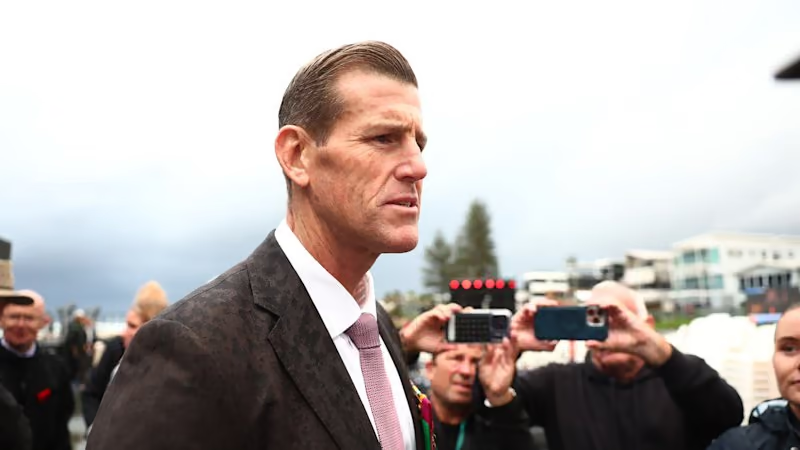
Ben Roberts‑Smith has rolled out a coordinated publicity offensive this week that culminates in a 150‑minute interview with Ben Fordham on 2GB, to be premiered on YouTube at 9am. The former SAS soldier, who is currently on bail as he prepares to contest five counts of war crimes murder charges, has also launched a clothing line and an Instagram presence as part of the campaign.
Roberts‑Smith’s public profile has been intensely contested since he brought, and later lost, a defamation case in which he challenged allegations he ordered and committed war crimes in Afghanistan. The long interview marks his first extended media appearance since the criminal charges were filed and gives him the platform to set out his version of events at length.
The interview was arranged with the newly formed Tapt network, the radio stations formerly owned by Nine, and its flagship presenter Ben Fordham. Promotional images released by the network show Roberts‑Smith wearing items from his new label, Epic 1 Two, which references his military call sign and markets itself to an “underdog” audience.
According to the broadcast agreement, Fordham was free to ask Roberts‑Smith whatever he wished, and Roberts‑Smith is not being paid for the interview. Tapt has framed the interview as part of a push to reach audiences on digital platforms beyond traditional radio, and the full conversation will be available in video form on YouTube.
The publicity push has attracted visible support from parts of the right of politics and media. Mining magnate Gina Rinehart introduced Roberts‑Smith at a veterans’ housing opening in Brisbane over the weekend, and business figures including Kerry Stokes have previously provided financial backing. One Nation has also adopted Roberts‑Smith as a prominent symbol in parts of its campaign messaging, and some polling indicates prospective One Nation voters view him more favourably than their lower‑house MP Barnaby Joyce.
Roberts‑Smith’s media support extends into several outlets and personalities. He has received favourable coverage in media owned or influenced by his backers, and public endorsements and social posts have appeared from commentators such as Peta Credlin and Karl Stefanovic. Alternative and partisan outlets have also amplified his messaging since the campaign began.
Not everyone sees the surge in publicity as neutral. Legal commentators warn extensive media exposure can have consequences for the criminal process. Richard Ackland, former Media Watch host and publisher of legal journals, warned of the risk that publicity could sway public opinion and erode the prospects of a fair trial.
"If you can poison the well enough, then they will make a plea to drop the charges against him," Ackland says. "I think that's a reality."
Tapt’s chief executive, Tom Malone, said the interview demonstrates the company’s digital strategy under its new owners, the Laundy family. Whether the broadcast moves the needle for the network or for Roberts‑Smith’s public standing remains to be seen, but the scale of the slot, two and a half hours on Sydney’s leading talk radio brand, is notable in itself.
For households and watchers of the legal process, the practical implications are twofold. The long interview gives Roberts‑Smith a wide reach to make his case to supporters and potential donors, while legal observers caution that high‑profile media campaigns during active proceedings can complicate judicial fairness and prosecutorial strategy. The coming days will show whether the offensive consolidates backing, raises funds or prompts fresh legal argument about prejudice to the trial process.