Organisers on October 19 postponed the Future Investment Initiative, the annual Saudi investment summit scheduled to begin on October 26, after weeks of missile and drone strikes by Houthi forces made Riyadh effectively unsafe for large international delegations.
The attacks have limited operations at Riyadh’s airport and led several Western governments to warn citizens against travel to the kingdom. Executives and diplomats were concerned hotel venues and other sites could be targeted, prompting the cancellation of this year’s event.
The summit’s postponement has become a focal point for wider problems facing Crown Prince Mohammed bin Salman: the Houthi campaign in Yemen, strains on public finances and a failure to reach key investment goals that underpinned his economic agenda.
Saudi officials have shelved or delayed major projects as the kingdom contends with rising costs and slower investment. Wages have not kept pace with inflation, and annual foreign direct investment is running at about one-third of the crown prince’s $US100 billion ($143 billion) target.
Economic forecasts have swung markedly. A year ago the IMF expected Saudi growth of roughly 4% for 2026; more recently the fund has revised its projection to a 3.3% contraction, reflecting the toll of conflict and weaker investor confidence.
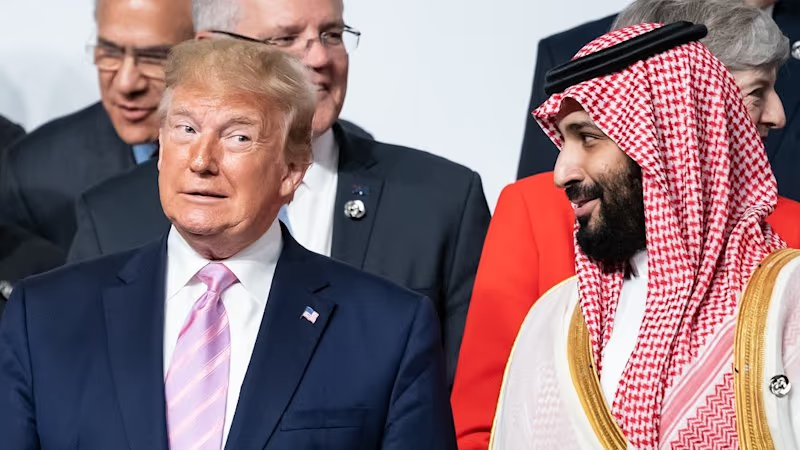
The kingdom’s political outreach to the United States has not insulated it from the military escalation. Saudi officials made high-profile financial offers to the American establishment, paid for events at Trump-owned golf courses and routed $US2 billion through businesses linked to the White House family, yet those ties have not prevented a wider confrontation that threatens the kingdom’s borders.
“He’s not loyal to anyone for long,” says one well-connected Saudi, reflecting frustration in some quarters about personal ties between Riyadh and Washington.
Since a Houthi missile struck Riyadh’s airport on October 10, killing 13 people, the crown prince has been less visible in public. Ministers have taken the lead visiting victims and delivering official statements as officials try to reassure a population that generally trusts the government but has been unsettled by recent disruptions.
Diplomats in Riyadh caution that talk of an existential challenge to the crown prince overstates the situation. One Western envoy noted he faced much tougher opposition seven or eight years ago, pointing to Mr Mohammed’s consolidation of power and the sidelining of rivals as factors that make an internal overthrow unlikely.
Saudi planners are also weighing hard military and diplomatic choices. The kingdom has limited air-defence interceptors, and officials fear a wider campaign could draw attacks not just from the Houthis in the south but from Iraqi militias in the north and Iran to the east. Riyadh has urged the US to avoid further escalation, warning that renewed strikes on Iran could widen the conflict.
The crown prince’s domestic reforms remain visible in everyday life: women can drive, female labour-force participation has almost doubled, and leisure industries such as concerts and cinemas have become common. Yet the economy is still heavily dependent on oil, the armed forces are oriented to regime defence rather than expeditionary war, and foreign policy continues to rely on external security guarantees. The leadership has pursued new security ties, including a Mecca pact with Pakistan and Turkey, but those arrangements are being tested by the current crisis.